Smart Irrigation Systems Kenya: Drip, Sprinklers & Automated Watering Solutions
Introduction to Smart Irrigation Systems Kenya
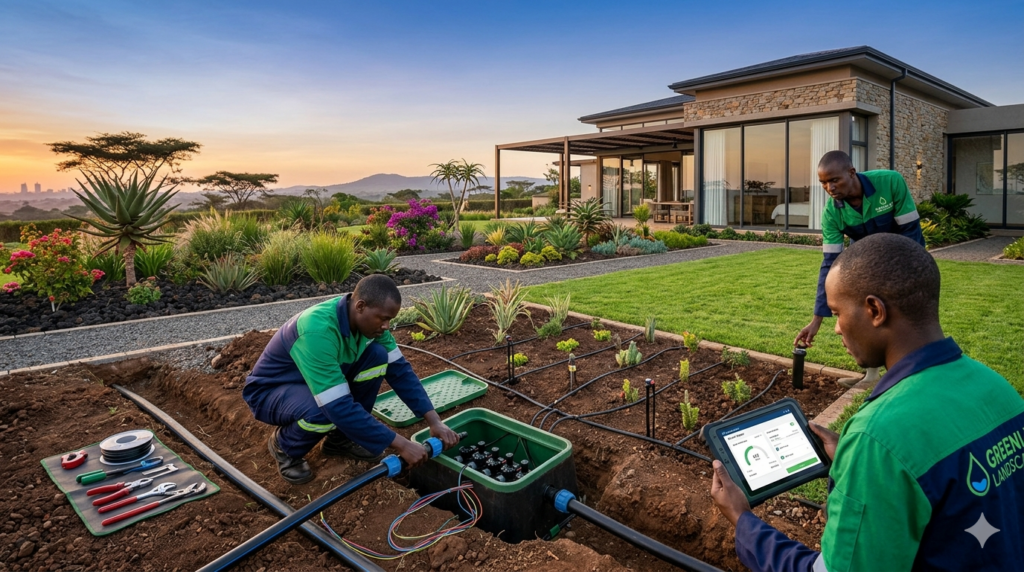
Maintaining a pristine, vibrant green landscape in East Africa requires a dependable water management strategy. Traditionally, property owners relied on manual hoses or basic mechanical timers to water their lawns. However, these outdated methods often lead to uneven watering, waterlogged plants, and massive utility bills. Consequently, modern landscape design has shifted toward automation and precision. Implementing Smart Irrigation Systems Kenya: Drip, Sprinklers & Automated Watering Solutions allows you to keep your landscape beautifully green throughout the year while utilizing the minimum amount of water necessary.
At Aquascapes, we integrate cutting-edge Internet of Things (IoT) technologies into our projects to take the guesswork out of property management. Therefore, this comprehensive guide will walk you through the top automated watering options available for your home or commercial space in 2026.
Why Modern Landscapes Require Smart Irrigation Kenya
Upgrading to an automated, intelligent watering framework is a highly strategic investment for any property owner. Indeed, switching from traditional manual methods to a smart irrigation kenya network offers clear financial and structural advantages.
1. Exceptional Water Efficiency
First, smart systems eliminate human error completely. Traditional watering methods often lose up to 50% of their water to wind drift, surface runoff, and rapid midday evaporation. By contrast, advanced irrigation systems kenya utilize localized distribution networks to ensure water drops directly onto root zones.
2. Tailored Watering Protocols
Second, a smart controller does not just operate blindly on a fixed time clock. Instead, it adjusts its watering schedules in real time based on active environmental conditions. Therefore, your landscape receives the precise volume of water it needs to thrive, preventing both under-watering and root rot.
Exploring the Primary Watering Solutions
To design a highly functional and sustainable landscape, your irrigation system must be customized to fit your specific terrain and plant varieties.
1. Advanced Drip Irrigation Kenya Setup
Without a doubt, drip irrigation Kenya setups are the most effective solution for specific planting zones. These include dense flower beds, boundary hedges, vegetable gardens, and urban foodscaping layouts.
- The Technology: Drip lines feature flexible, UV-resistant tubing fitted with pressure-compensating emitters. These lines run directly beneath your organic mulch.
- The Benefit: Because the lines deliver small, frequent doses of water directly to the soil at the base of each plant, evaporation losses are reduced to nearly zero. Additionally, keeping the surrounding inter-row space dry minimizes weed growth across your backyard landscaping Kenya project.
2. High-Performance Pop-Up Sprinklers
For maintaining large, unobstructed lawns, automatic pop-up sprinklers remain the industry standard.
- The Technology: Sprinkler heads are installed completely flush with the ground, rising up to water the lawn only when system pressure is activated.
- The Benefit: This subterranean design keeps your lawn entirely safe for children, pets, and lawnmowers during the day. When paired with rotating nozzles, pop-up systems provide perfectly even water coverage across your entire turf canvas.
The Components of an Intelligent Watering Framework
What elevates a basic watering setup into a truly smart system? The secret lies in the underlying sensor integration and controller data.
IoT Soil Moisture Sensors
Soil moisture sensors serve as the primary data input for smart scheduling. Installed directly within your lawn’s primary root zone, these sensors track the volumetric water content of the soil. Consequently, if the soil is already damp from a morning shower, the sensor alerts the main controller to skip the next watering cycle automatically.
Weather-Based Smart Controllers
Modern smart controllers sync directly with local Nairobi weather stations via Wi-Fi. If high winds or heavy rains are forecasted, the system adjusts its operations to prevent water waste. Furthermore, you can easily monitor your entire system, open specific valves, and track water consumption data through your smartphone from anywhere in the world.
Automated Valve Management
Instead of requiring manual labor to open ball valves across your plot, automated systems utilize electric solenoid valves. These valves partition your yard into distinct hydrozones. Thus, your delicate flower beds can be watered independently from your tough, drought-tolerant plants Kenya.
Installation Costs and Return on Investment (2026)
While setting up advanced technology requires an upfront financial investment, the long-term savings on water bills and labor are substantial. In fact, most property owners recover their installation costs within two to three seasons through lower utility expenses and higher plant survival rates.
| System Type & Scale | Estimated Equipment & Installation Cost (KES) | Best Used For |
| Small Townhouse Kit | 15,000 – 35,000 | Compact flower beds, backyard gardens, and simple drip line zones. |
| Standard 50×100 Plot System | 50,000 – 120,000 | Small lawns, boundary hedges, and a mix of drip and sprinkler zones. |
| Quarter-Acre Smart Setup | 15,000 – 40,000 (Add-on for Smart Controllers) | Large residential landscaping Kenya projects with automated Wi-Fi timers. |
| Commercial-Grade Infrastructure | 250,000 – 650,000+ | Large corporate parks, housing estates, hotels, and institutional grounds. |
4 Crucial Upkeep Steps for Long-Term Performance
To ensure your irrigation system installation Kenya continues to operate at peak efficiency for decades, you must follow a consistent preventative upkeep routine.
1.Clean Filters Regularly:Filter Management.
Check and flush your primary disc or screen filters once a week. This critical step removes dirt, silt, and algae before they can enter your sub-mainlines.
2.Flush Your Drip Lines:Line Maintenance.
Open the end caps of your drip lines once every quarter. Let the water run freely for a few minutes to clear out any fine sediment that has accumulated inside the pipes.
3.Inspect Emitters for Clogging:Diagnostic Check.
Walk through your garden zones during an active watering cycle. Look for blocked emitters or misaligned sprinkler heads, and clear away any encroaching roots or dirt.
4.Replace Controller Batteries:Battery Upkeep.
Change the backup batteries in your automated timers once a year. This simple step ensures your programmed schedules remain active during sudden power blackouts.
Why Aquascapes is the Top Irrigation Authority in Kenya
At Aquascapes, we are widely recognized as the premier best landscaping company in Kenya because we bridge the gap between landscape beauty and advanced agricultural engineering. We custom-design every automated system to match your site’s specific soil type, water source, and topography. From intricate residential smart kits to massive commercial landscaping Kenya projects, our certified technicians deliver high-quality installations built to last under the intense East African sun.
“True innovation in landscaping isn’t just about what you see above the ground; it’s about the invisible engineering that protects your resources below it.” — The Aquascapes Engineering Division.
FAQs on Smart Irrigation Systems Kenya
1. What exactly makes an irrigation system ‘smart’ in Kenya?
A system is considered smart when it utilizes active sensors (like soil moisture probes) or live weather data to adjust its watering schedules automatically, rather than running on a rigid, unchangeable timer.
2. Can I connect an automatic sprinkler system to borehole water?
Yes, absolutely. However, because borehole water in areas like Kitengela or Syokimau often contains high levels of mineral salts or silt, installing high-quality disc filters is mandatory to prevent your system from clogging.
3. Does drip irrigation save water compared to standard sprinklers?
Yes. Localized drip irrigation Kenya systems can save between 40% and 70% more water than traditional overhead watering. This is because they deliver water directly to the plant roots, cutting out wind drift and evaporation.
4. How often does an automated setup require professional garden maintenance Kenya?
While day-to-day operations are fully automated, you should schedule a professional diagnostic check once a quarter. This covers filter servicing, pressure testing, and structural tree pruning Kenya near spray zones.
5. Where can I source genuine, warranted smart irrigation components in Nairobi?
Aquascapes stocks and installs fully warranted, professional-grade irrigation equipment tailored specifically for the East African climate.
Conclusion
In conclusion, embracing Smart Irrigation Systems Kenya: Drip, Sprinklers & Automated Watering Solutions is the most effective way to protect your landscape investment. By replacing manual guesswork with automated, sensor-driven technology, you can maintain a flawless, resort-style lawn while significantly lowering your monthly operational expenses.
Ready to automate your property’s watering needs? Whether you are looking for local landscaping services near me or a full water-saving garden renovation, Aquascapes is here to help. Contact our engineering office today to book your technical site assessment!
External Resources:
- National Environment Management Authority (NEMA) – Official guidelines on sustainable water use and urban irrigation compliance.
- Architectural Association of Kenya (AAK) – Architectural and external works engineering design reference standards.